Garden clearance in Teesside
Overgrown, inherited or abandoned gardens stripped back to usable ground: brambles and saplings cut and dug out, old structures dismantled, rubbish and green waste removed under a registered waste carrier licence. Typically £250 to £800 depending on volume and access.
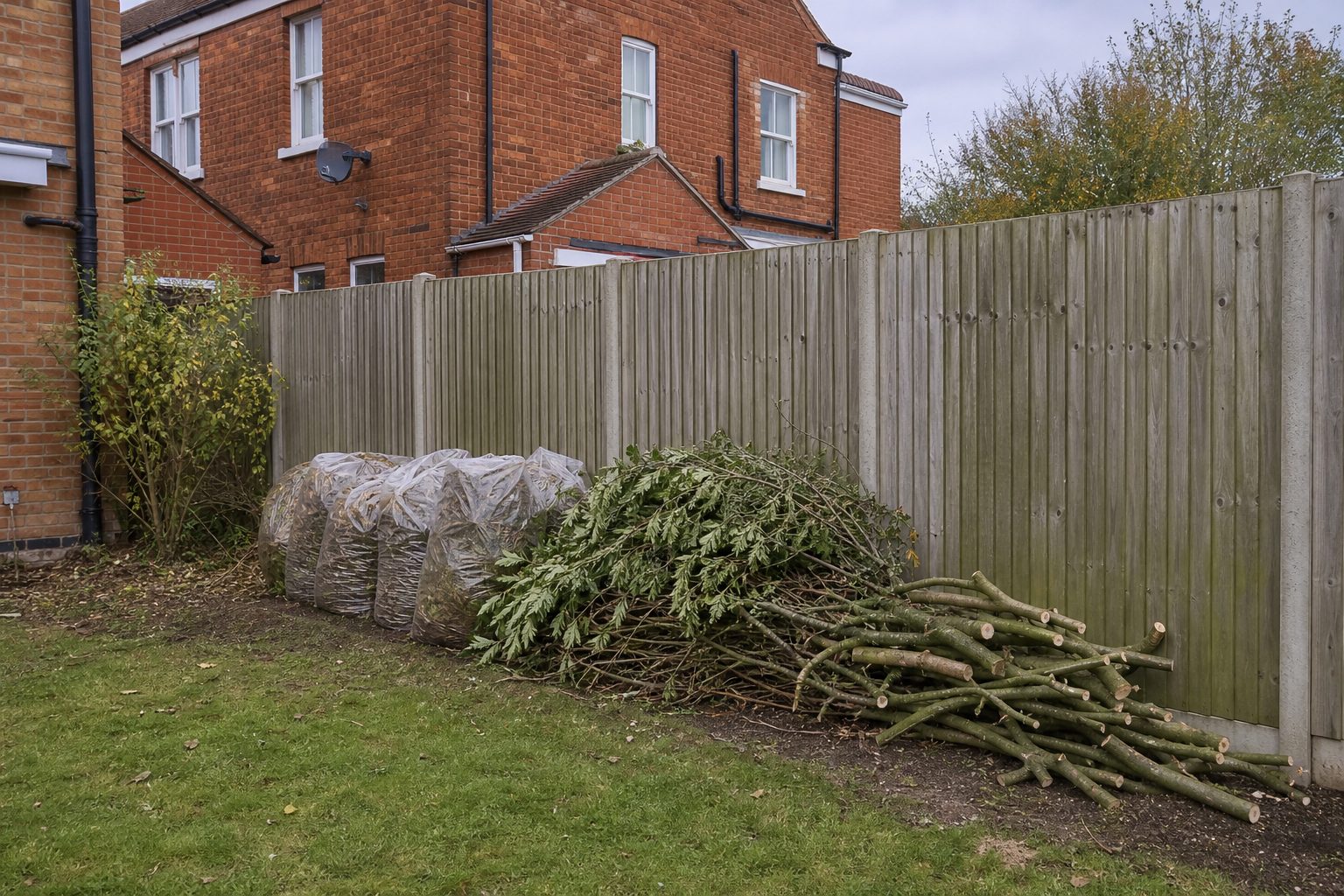
What clearance means
Clearance is the heavy end of garden work. It covers plots where the lawn has disappeared under brambles, where self-seeded sycamore and buddleia have taken hold in the borders, where a rotten shed is collapsing into the fence, and where a decade of bagged rubbish sits behind the garage. The output is bare, usable ground, not a manicured garden, and that distinction is worth being clear about before anyone quotes.
Where the garden is merely untidy, a one-off tidy-up costs a fraction as much and gets you further. Clearance is for the plots that a tidy-up cannot touch.
How clearance is priced
| Job | Guide price | What it covers |
|---|---|---|
| Small yard or terrace garden | £250 to £400 | One day, one or two loads out |
| Average semi, heavily overgrown | £400 to £650 | Two days, brambles, saplings, three loads |
| Large or long-abandoned plot | £650 to £800+ | Machinery, multiple loads, structures out |
| Waste disposal | £70 to £95 a cubic yard | Green waste; mixed waste costs more |
| Shed or greenhouse removal | £120 to £280 | Dismantled, loaded, base left clear |
Volume beats hours in this trade. Two days of cutting can generate six cubic yards of waste, and that disposal cost is real money before anyone has been paid for the labour. A quote that shows labour and disposal separately is far easier to judge than a single figure.
Waste, licences and your legal duty
Anyone removing waste from your property as a business must be registered with the Environment Agency as a waste carrier. That registration is free to check on the public register, and it is worth checking, because householders in England have a duty of care over their own waste: if it is fly-tipped after leaving your garden and it is traced back to you, the fact that somebody else dumped it is not automatically a defence.
Ask for the carrier registration number and, for larger jobs, a waste transfer note or tip receipt. A legitimate operator produces both without fuss. A cash-only van with no paperwork and a suspiciously low price is exactly the arrangement that ends with your address on a pile of green waste in a lay-by near Wynyard.
Order of work on a clearance
- Walk and agree. What stays, what goes, which plants are wanted, where the boundary actually runs.
- Cut down. Brambles, nettles and long grass reduced with brushcutters, then raked into piles for loading.
- Woody growth out. Saplings, buddleia and overgrown shrubs cut low, then stumps dug or ground where they would regrow.
- Structures and rubbish. Old sheds, rotten decking, broken slabs and dumped household items separated for the correct disposal route.
- Final rake and load. The ground raked level, the last loads out, and the garden handed back as a blank surface.
Japanese knotweed and other stop signs
If Japanese knotweed is present, clearance stops. Cutting and moving it spreads it, the material is controlled waste, and it needs a specialist treatment plan rather than a brushcutter. Bamboo running from next door, sycamore stumps against a boundary wall and ivy holding up a failing fence are the other three finds that change a job, and any of them is worth flagging in your enquiry. Asbestos in an old shed roof or garage panel is also common on older Teesside properties, and it is a licensed disposal route, not something to break up and bag.
Best time of year
November to February is the cheapest and quickest window. Growth is dormant, the volume is lower, brambles are easier to see and to pull, and the diary is far less crowded than it is in May. The exceptions are nesting birds in dense hedges and shrubs between March and August, which must be checked before cutting, and waterlogged clay ground where machinery would do more damage than good.
What happens next
Cleared ground does not stay clear. Bare soil on Teesside is colonised within one season, and bramble roots left in the ground will be back by July. Most people follow a clearance with either a planting scheme, new turf, or a simple maintenance rota to hold the ground while they decide. Saying which of those you are aiming for changes how the clearance is finished, so mention it early.