Patio and path jet washing in Teesside
Green algae, moss and years of grime lifted off patios, paths, steps and decking with a rotary surface cleaner, from £2.50 per square metre with a minimum charge. Joints are re-sanded where the washing takes the sand out, and the surrounding planting is protected.
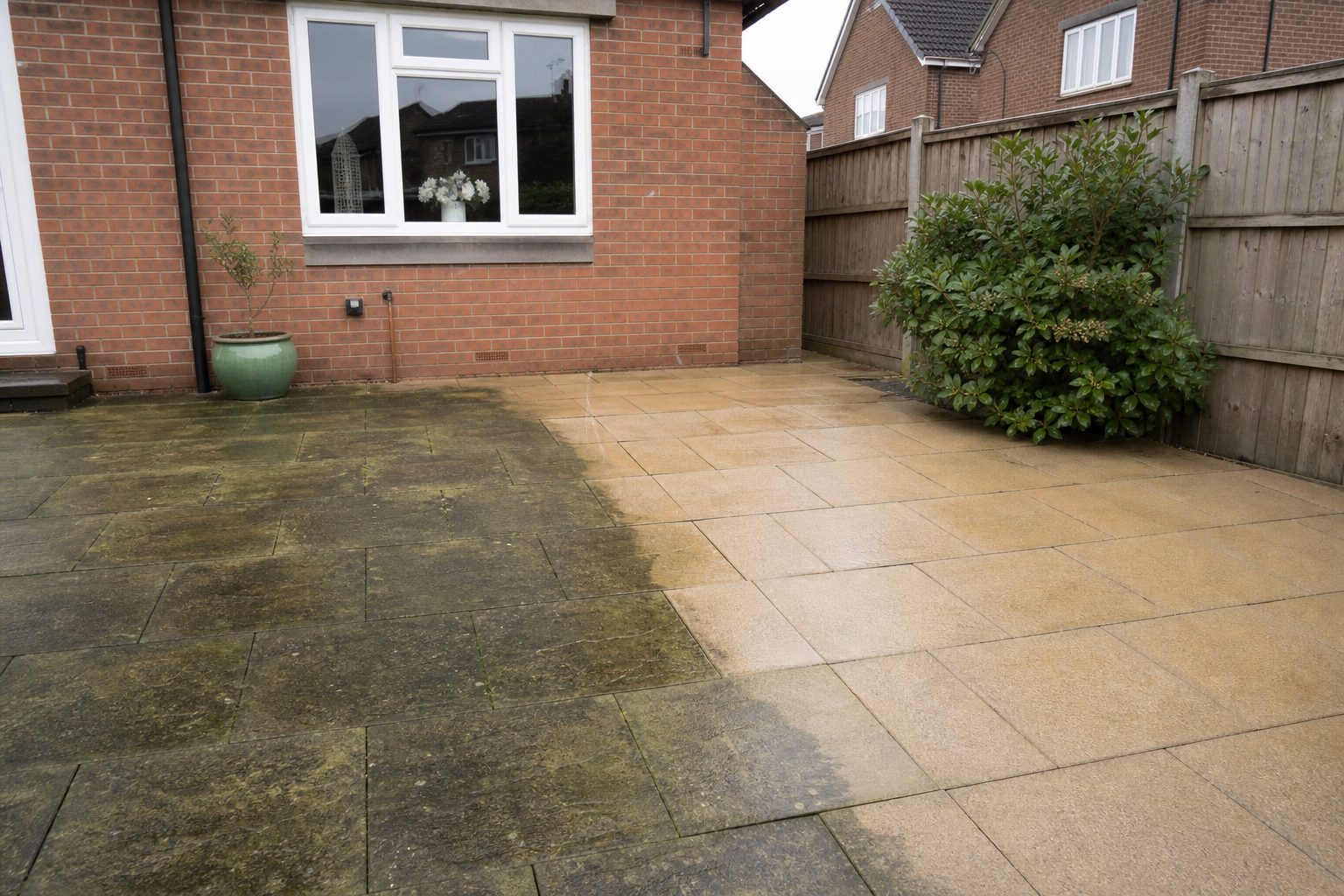
Why hard surfaces go green here
A damp maritime climate, mild winters and gardens that see limited direct sun add up to ideal conditions for algae. The green film that makes a patio slippery by February is a living surface layer feeding on moisture and airborne nutrients, and it returns every year unless the conditions change. North-facing patios, shaded side paths and anything under a tree canopy go first and worst.
Slipperiness is the practical issue rather than the appearance. A wet, algae-covered path in a Teesside November is a genuine fall risk, particularly for older residents, and it is the reason many people book a clean before winter rather than for spring photos.
Prices
| Surface | Guide price | Notes |
|---|---|---|
| Patio or paved area | £2.50 to £4.50/m² | Rotary surface cleaner, rinse down |
| Minimum job charge | £80 to £120 | Covers set-up, water and travel |
| Path or side passage | £60 to £120 | Depends on length and access |
| Kiln-dried sand re-jointing | £1 to £2/m² | Block paving after washing |
| Decking wash | £3 to £5/m² | Lower pressure, wide fan, with the grain |
Access to water and power on site keeps the price down. Where neither is available, a bowser or generator adds cost, so it is worth mentioning an outside tap either way when you enquire.
Surfaces and how they are treated
- Concrete flags and block paving: the robust cases. A rotary surface cleaner gives an even finish without the striping a hand lance leaves behind.
- Indian sandstone: softer than it looks. Too much pressure at close range pits the surface permanently, so distance and technique matter more than machine size.
- Imprinted concrete: cleans well, but the sealer comes off with the dirt and the surface needs resealing afterwards to keep its colour.
- Decking: low pressure, wide fan, always with the grain. Aggressive washing raises the timber fibres and leaves a furred, splintery board.
- Old flags with loose bedding: checked first, because a strong jet under a rocking flag washes the bedding out and makes the problem worse.
Joints, sand and what happens after
Washing block paving takes the kiln-dried sand out of the joints. Left empty, the blocks lose interlock and start to creep, so the joints should be refilled once the surface has dried, usually a day or two later. On flagged patios with mortar joints, washing can expose failed pointing that was already crumbling, and repointing is a separate job worth pricing rather than ignoring.
Sealing is optional and often oversold. A good sealer slows re-greening and makes future cleans easier, but it needs a genuinely dry surface and it has to be redone every few years. Anyone promising a permanent fix is describing something that does not exist in this climate.
Protecting the garden
Jet washing throws dirty water several metres. Borders next to the patio need covering or wetting down first, pots move out of range, and the run-off should be directed away from planting and towards a drain. Chemical treatments have their place on very heavy moss, but the choice of product matters where run-off reaches beds, ponds or a lawn, and it should be discussed rather than assumed.
Airbricks, door thresholds and any external electrics also need respect. Water forced under a threshold or into an airbrick during a clean is a much more expensive problem than the green film ever was.
When to book
Late spring and early autumn are the two natural slots: spring to get the patio usable, autumn to remove the slip hazard before winter. A clean lasts roughly a year in a shaded Teesside garden and two in an open, sunny one. Booking the wash at the same time as a tidy-up or a maintenance visit saves a second call-out charge and gets the whole garden looking finished on the same day.