Regular garden maintenance in Teesside
A fortnightly or monthly visit that keeps the lawn cut, the edges sharp, the borders weeded and the hedges in check, priced from £35 a visit on an average Teesside garden. The rota is agreed with you, and the price is fixed for the season rather than invented each time.
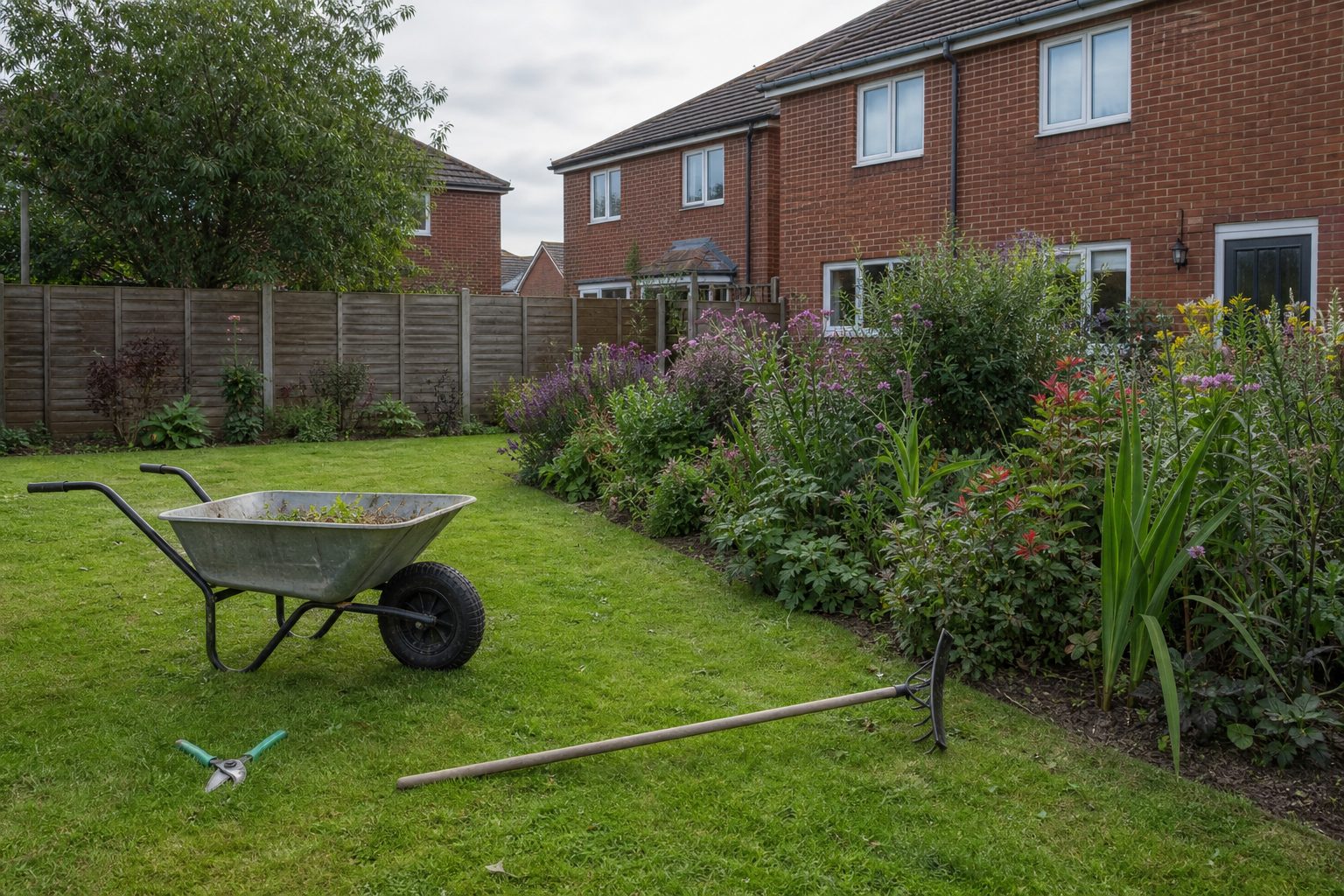
What a maintenance visit actually covers
The standard round on a Teesside garden is straightforward and repeatable: cut the lawn at the agreed height, edge the borders and any paths, hoe or hand-weed the beds, dead-head what is flowering, sweep the hard surfaces and take the clippings away. Anything beyond that, such as hedges, pruning or planting, is either built into the schedule at set points in the year or quoted separately when it comes up.
The value of a rota is that nothing ever becomes a project. Grass cut every fortnight takes twenty minutes. The same grass left for six weeks needs strimming first, produces four times the waste and takes half a morning. That single dynamic is why regular visits work out cheaper per hour of tidiness than any other arrangement.
Choosing a frequency
| Frequency | Suits | Typical season cost |
|---|---|---|
| Weekly, April to September | Large plots, prominent front gardens, holiday lets | £700 to £1,400 |
| Fortnightly, March to October | Most family gardens on Teesside | £500 to £900 |
| Monthly, all year | Low-planting gardens, rentals, second homes | £420 to £720 |
| Six-weekly, winter only | Gardens maintained by the owner in summer | £140 to £260 |
Fortnightly through the growing season and monthly through winter is the pattern that fits the local climate best. Growth here runs hard from May to July and slows sharply by mid October, so paying for weekly visits in November buys very little.
What changes the price
Size is the obvious factor, but it is rarely the decisive one. Access matters enormously: a terraced garden reached only through the house, or a rear lane too narrow for a van, adds time to every visit and to every waste run. Ground conditions matter too, because heavy clay stays soft and rutted after rain, and mowing a saturated lawn does more harm than skipping it. Planting density is the third factor, since a garden of shrubs and gravel needs a fraction of the attention that deep herbaceous borders demand.
Front gardens are the item most often left off a quote by accident. If you want the front kept as well, say so at the enquiry stage: it is usually a small addition to a fortnightly price, and a large annoyance if it turns up as an extra later.
Seasonal jobs inside a maintenance year
- Spring: first cuts high, borders cleared of winter debris, mulch spread, edges recut properly for the season.
- Early summer: peak cutting frequency, weekly weed control while seedlings are small, shrubs shaped after flowering.
- Late summer: hedges trimmed once nesting is over, dead-heading to keep displays going into September.
- Autumn: leaf clearance, final cuts at a raised height, tender plants lifted or protected, hard surfaces cleaned before the wet.
- Winter: dormant pruning, structural tidying, repairs to edging and beds, and planning what changes next year.
Contracts, invoices and cancelling
A fair maintenance arrangement is monthly in arrears or per visit, with a season length stated and a notice period of no more than a month. Multi-year lock-ins and upfront annual payments are worth reading very closely before signing. Wet-weather policy is the other clause to check: most local gardeners either shift the visit within the same week or carry it to the next round, and a clear rule beats a vague one.
Waste should also be spelled out. Some rounds bag clippings for your own green bin, others remove everything under a waste carrier registration. Both are legitimate; only one of them costs the gardener money, so the prices are not comparable until you know which is which.
Pairing maintenance with a reset
If the garden has run wild, a rota alone will not fix it. The efficient route is a one-off tidy-up or a full clearance first, then maintenance from a clean baseline. Hedges usually need their own annual cut booked as a separate item, and a tired lawn benefits from a consistent cutting height more than from anything else. Say what state the garden is in when you enquire and the quote comes back accurate first time.