Lawn mowing in Teesside
Weekly or fortnightly grass cutting with the edges done and the clippings taken away, from £18 a cut on an average back garden. Overgrown grass is brought down in stages rather than scalped, and the cutting height is set for the season rather than the machine.
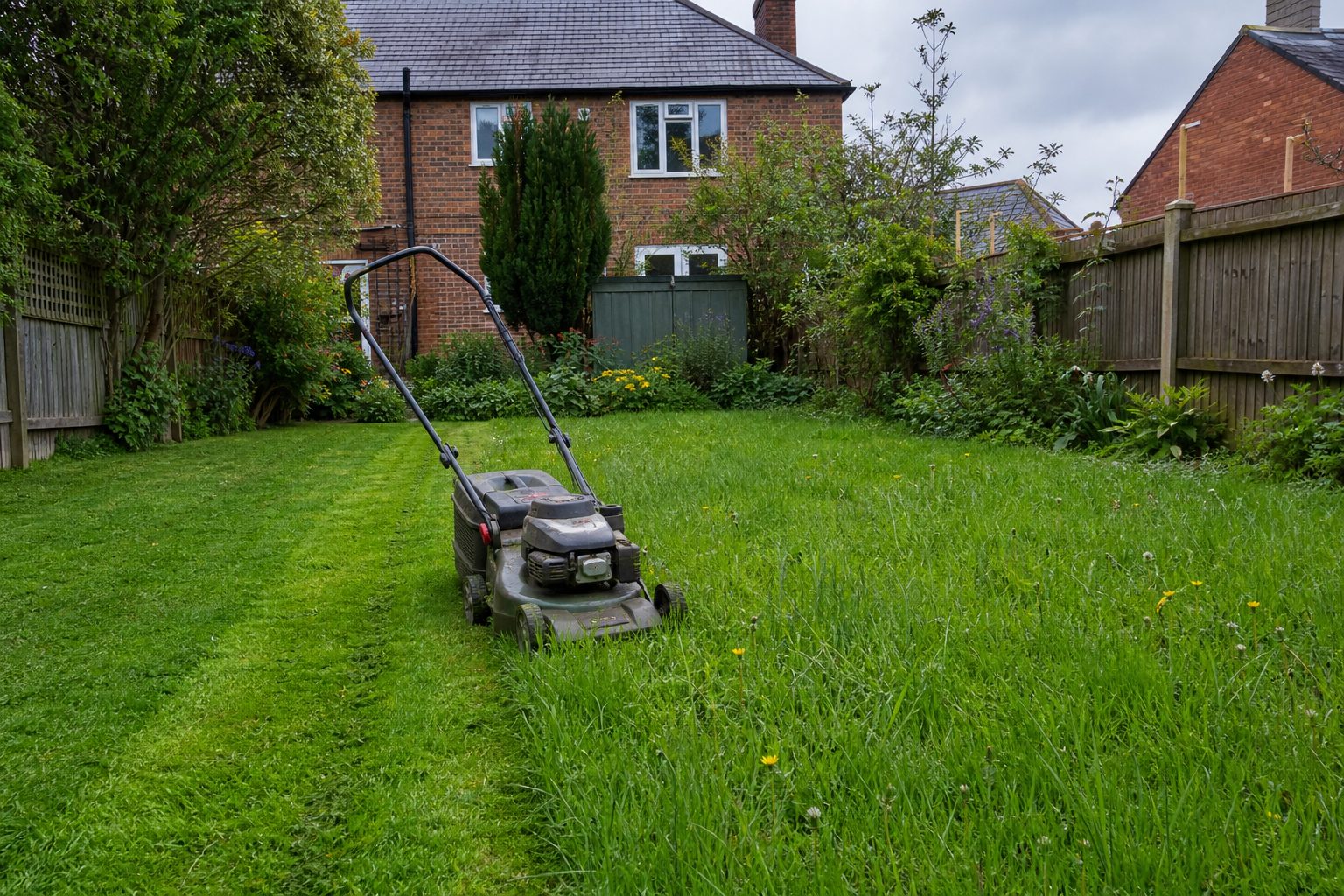
Mowing on its own
Plenty of people are happy weeding their own borders and simply want the grass dealt with. Standalone mowing is priced by area and access: £18 to £25 for a small back garden, £25 to £35 where there is a front and back to do or the plot is larger, and a per-square-metre rate on anything approaching a paddock. Add the edges, which most people do, and it is a few pounds more per visit for a noticeably sharper result.
Where the whole garden needs attention rather than just the grass, a maintenance round works out better value, because the gardener is already on site and the borders get done in the same slot.
Cutting height matters more than frequency
The single most common mistake on local lawns is cutting too short. Grass kept at 25 to 40mm holds moisture, shades out weed seedlings and builds a deeper root system. Grass scalped to 15mm goes yellow within a day, dries out in June and hands the space straight to moss over winter. Heavy clay ground across much of Teesside makes that worse, because a stressed lawn on compacted soil has nowhere to send roots.
The other rule is the one-third rule: never remove more than a third of the leaf in a single cut. It is why a fortnightly rota in May sometimes needs a double pass, and why a garden left for six weeks cannot be brought back to height in one go without damage.
| Period | Height | Why |
|---|---|---|
| March, first cuts | 40mm | Growth is soft and the ground is still cold |
| May to July | 25 to 30mm | Peak growth, dense sward, weekly or fortnightly |
| Dry spells | 35 to 40mm | Longer leaf shades the soil and holds moisture |
| September to October | 30 to 40mm | Hardening off before winter |
| Winter | Topping only if needed | Stay off frozen or waterlogged clay |
Overgrown grass
Grass over about 150mm should not meet a rotary mower at cutting height. The proper sequence is to top it with a strimmer or brushcutter, rake the arisings off, then mow a fortnight later at a high setting and drop the height gradually over two or three cuts. Doing it in one pass buries the lawn under a thatch of cuttings that yellows the sward and invites moss straight back in.
This is why a first cut on a neglected lawn costs more than the ongoing rate. It is two or three times the work and produces far more waste, and any quote that treats it as a routine visit will either arrive short of time or leave a mess.
Clippings, wet grass and Teesside weather
Clippings are normally collected and removed, which keeps the finish clean and avoids feeding moss with a wet mat of cuttings. Mulching, where the clippings are chopped fine and returned, works well in dry weather on a well-fed lawn and badly in a damp North East autumn.
Wet ground is the local reality. Boulder clay holds water at the surface for hours after rain, and mowing a saturated lawn tears the surface, smears the soil and leaves wheel ruts that stay all season. A sensible round shifts the visit by a day or two rather than mowing through it, and a gardener who never reschedules is not doing your lawn a favour.
Edges, obstacles and finish
A crisp edge does more for how a lawn looks than any amount of extra mowing. Border edges are cut back to the line with a half-moon iron once or twice a season and kept sharp with a strimmer or edging shears at each visit. Trampolines, swings, garden furniture and dog toys all slow a visit down, and moving them beforehand keeps the price where it should be.
If the lawn itself is in poor condition, more mowing will not fix it. Thin, mossy or compacted turf needs the underlying problem addressed, and a regular round plus sensible cutting height is the starting point rather than the cure.